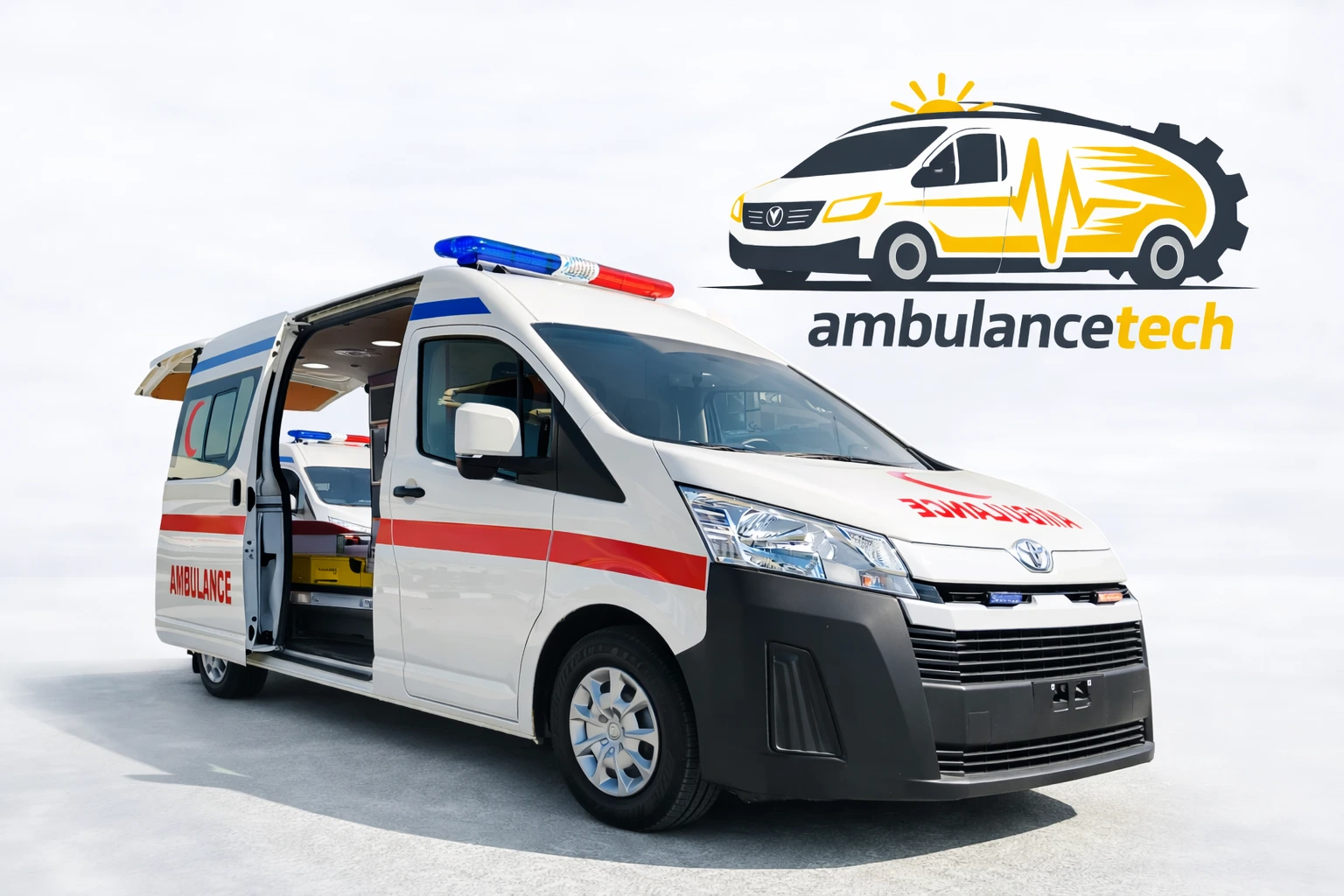
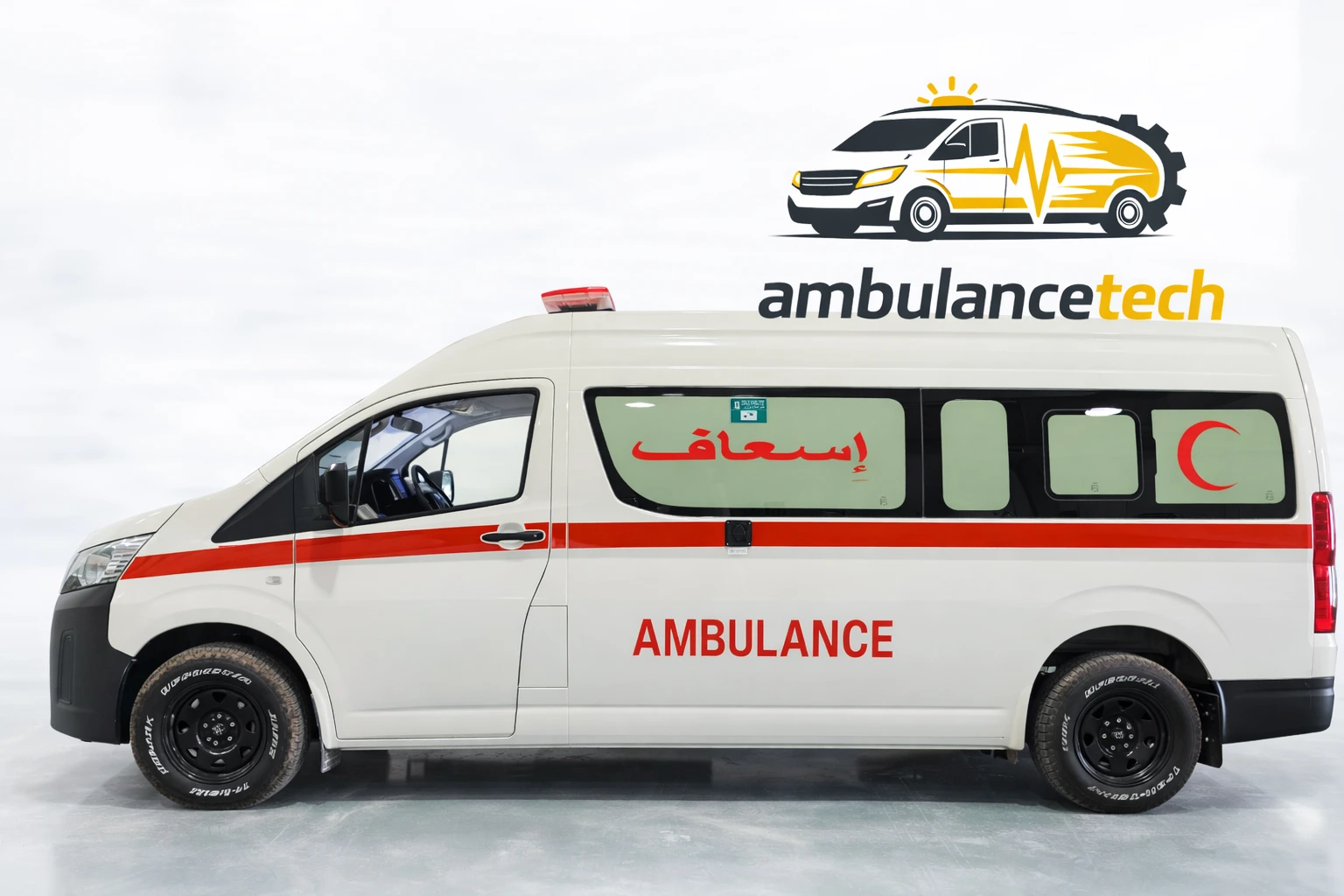
Toyota Hiace 4×4 Ambulance
The Toyota Hiace 4×4 Ambulance is a purpose-built emergency medical vehicle engineered specifically for the demanding environmental and infrastructural conditions prevalent across Africa. Combining Toyota’s legendary reliability with selectable four-wheel-drive capability, this ambulance delivers sustained performance on paved highways, degraded roads, and unpaved surfaces including gravel, sandy tracks, and muddy conditions.
Designed for rural patient transfer, inter-facility transport, NGO field operations, industrial medical standby, and government EMS integration, this vehicle represents the gold standard for off-road emergency medical response in Africa.
Vehicle Base & Chassis Specifications
| Specification | Detail |
|---|---|
| Base Vehicle | Toyota Hiace 4×4 Panel Van |
| Drivetrain | Selectable 4WD (2H/4H/4L) |
| Engine | Turbocharged Diesel (High low-end torque) |
| Transmission | Manual |
| Steering Configuration | Left-Hand Drive (LHD) |
| Suspension | Reinforced for medical module weight |
| Payload | Within manufacturer’s GVWR |
Off-Road & Environmental Performance
Terrain Capability
Engineered for sustained travel on:
-
Unpaved roads and compacted gravel
-
Sandy tracks and muddy conditions
-
Severely degraded paved roads
-
Rural and remote terrain
Climate Adaptations
-
Thermal Management: Engine cooling system optimized for continuous operation in high ambient temperatures exceeding 40°C (common in Senegal, Kenya, Ethiopia)
-
Dust Protection: Enhanced air filtration and cabin sealing to minimize dust ingress into engine bay and patient compartment
-
Corrosion Protection: Additional anti-corrosion treatment for coastal and humid climates (Ghana, Cameroon, Tanzania)
Ground Clearance
Standard ground clearance of Hiace 4×4 platform maintained for navigating rutted tracks, drainage humps, and uneven surfaces.
Ambulance Conversion & Medical Cell Construction
Structural Integrity
-
Patient cell constructed with reinforced frame integrated with vehicle chassis
-
Ensures rigidity and crash safety
-
Full thermal and acoustic insulation for temperature regulation and noise reduction
Interior Surfaces
| Component | Specification |
|---|---|
| Walls/Ceiling | Smooth, non-porous, medical-grade composite panels |
| Flooring | Seamless, chemical-resistant, anti-slip material |
| Cleaning | All surfaces designed for rapid decontamination and infection control |
Medical Equipment Configuration
BLS (Basic Life Support) Configuration
| Component | Description |
|---|---|
| Stretcher System | Certified, height-adjustable, wheeled ambulance stretcher with multi-point locking mechanism |
| Oxygen System | Fixed high-capacity medical oxygen cylinder in secured, externally-ventilated compartment with regulator, flowmeter, and outlet points |
| Suction Unit | Portable or fixed electrically-operated suction unit with consumables storage |
| Storage | Locking, shock-mounted cabinets and drawers for BLS equipment, trauma kits, IV supplies, and immobilization devices |
ALS (Advanced Life Support) Optional Upgrade
-
Infrastructure Preparation: Electrical pre-wiring for patient monitor/defibrillator and additional medical devices
-
Secured Mounting Points: For ALS equipment
-
Expanded Medical Gas System: Preparation for additional oxygen outlets and optional medical air system
-
Electrical Load Capacity: Dual electrical system sized for continuous and peak loads of ALS equipment
Electrical & Power System
| Component | Specification |
|---|---|
| Dual Battery System | Isolated system: primary battery for engine, secondary deep-cycle battery bank for medical equipment |
| Inverter | Pure sine wave inverter for stable AC power to sensitive medical devices |
| External Power Inlet | Standard 220V AC inlet for grid/generator power when stationary |
| Lighting | LED medical examination lighting, general interior lighting, low-intensity night lights, exterior work lights |
Typical African Operating Scenarios
Rural & Remote Patient Transfer
Transport from dispersed communities to primary or secondary healthcare facilities over long distances on mixed-quality roads.
Inter-Facility Transport
Scheduled or emergency transfers between hospitals involving highways and urban traffic.
NGO & Humanitarian Field Operations
Deployment as mobile medical unit for project sites, vaccination campaigns, or emergency response in regions like DR Congo or the Sahel.
Industrial Medical Standby
Emergency medical services at mining, oil & gas, or large-scale agricultural operations in Zambia, Nigeria, or Mozambique.
Government EMS Integration
Standardized, serviceable platform for Ministry of Health national or regional fleets.
Export Configuration & Compliance
| Aspect | Detail |
|---|---|
| Build Standard | Complete turn-key unit, tested and inspected prior to shipment |
| Documentation | Certificates of conformity, medical equipment lists, detailed technical manuals |
| Homologation Support | Documentation for registration and type approval in African markets |
| Shipping Terms | FOB or CIF Incoterms to major African ports (Mombasa, Dar es Salaam, Durban, Lagos, Tema) |
| Price | Available upon request – contact for formal quotation |
Frequently Asked Questions Toyota Hiace 4×4 Ambulance (Technical Focus)
Is the Toyota Hiace 4×4 suitable for off-road ambulance use in Africa?
Yes. The selectable 4WD system, diesel powertrain, and robust ladder-frame chassis of the Hiace 4×4 provide a mechanically suitable base. The subsequent ambulance conversion includes necessary reinforcements and systems engineering to create a fit-for-purpose off-road medical transport vehicle.
What type of roads and terrain can this ambulance operate on?
It is engineered for reliable operation on paved highways, severely degraded paved roads, and sustained travel on unpaved surfaces including gravel, hard-packed earth, sandy tracks, and muddy conditions. It is not designed as an extreme off-road vehicle for rock crawling or deep water fording.
Is the vehicle designed for high-temperature environments?
Yes. Core design considerations include engine and transmission cooling capacity for sustained operation in ambient temperatures exceeding 40°C, thermal insulation of the patient compartment, and the use of materials resistant to UV degradation.
Can the ambulance be configured for both BLS and ALS use?
The standard build is a complete BLS ambulance. The platform is pre-prepared for ALS upgrades, with the necessary electrical capacity, mounting points, and medical gas infrastructure. ALS medical devices are typically procured separately by the end-user to meet specific clinical protocols.
How is maintenance and spare part availability in Africa?
The Toyota Hiace platform benefits from the most extensive parts distribution and technical service network across the continent. Mechanical components for the base vehicle are widely available in Kenya, Uganda, Nigeria, South Africa, and most major markets, minimizing operational downtime.
What factors affect the final technical specification and price?
Key variables are: the level of medical equipment (BLS vs. ALS devices), the choice of optional equipment (e.g., roof air conditioning, additional exterior lighting, communication systems), the specific destination country’s import regulations, and the chosen shipping terms (FOB vs. CIF).
Contact Information
Infinity Chassis Units
Ankara, Turkey
Email: sales@ambulancetech.com
Telephone: +90 555 104 06 48
For a formal quotation, detailed technical specifications sheet, or to discuss a tender requirement, please contact our technical sales department with your specific operational parameters and intended region of deployment in Africa.
| Ambulance type | B – Emergency, C – ICU / ALS |
|---|---|
| Certification | CAAS GVS, EN 1789 |
| Drive type | 4×4 |
| Powertrain fuel type | Diesel, Petrol (Gasoline) |
| Roof type | High Roof |
| Vehicle brand | Toyota |