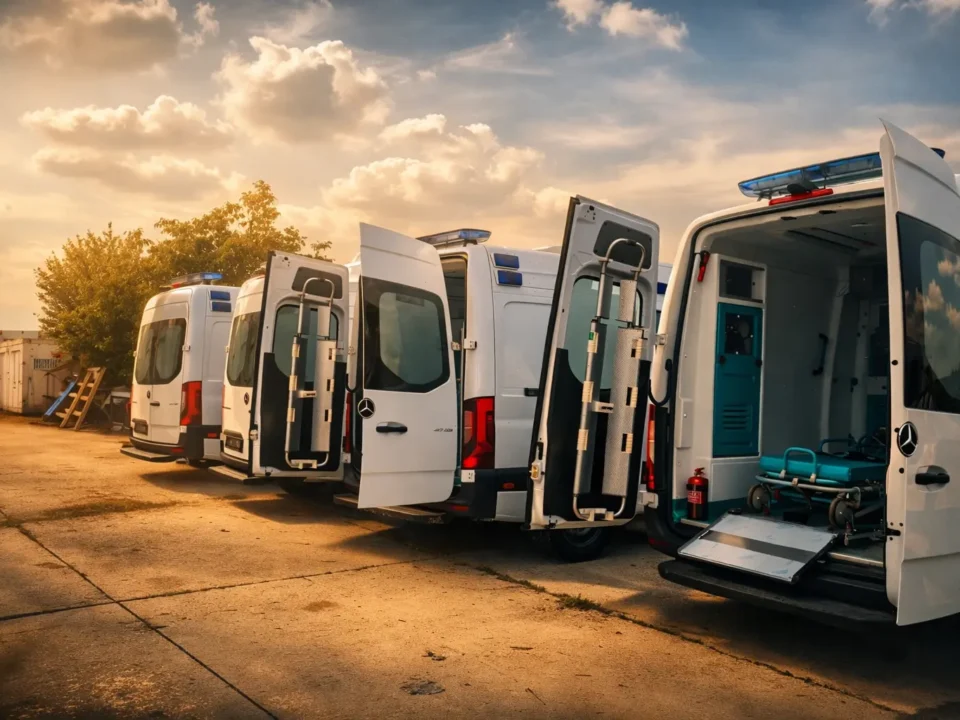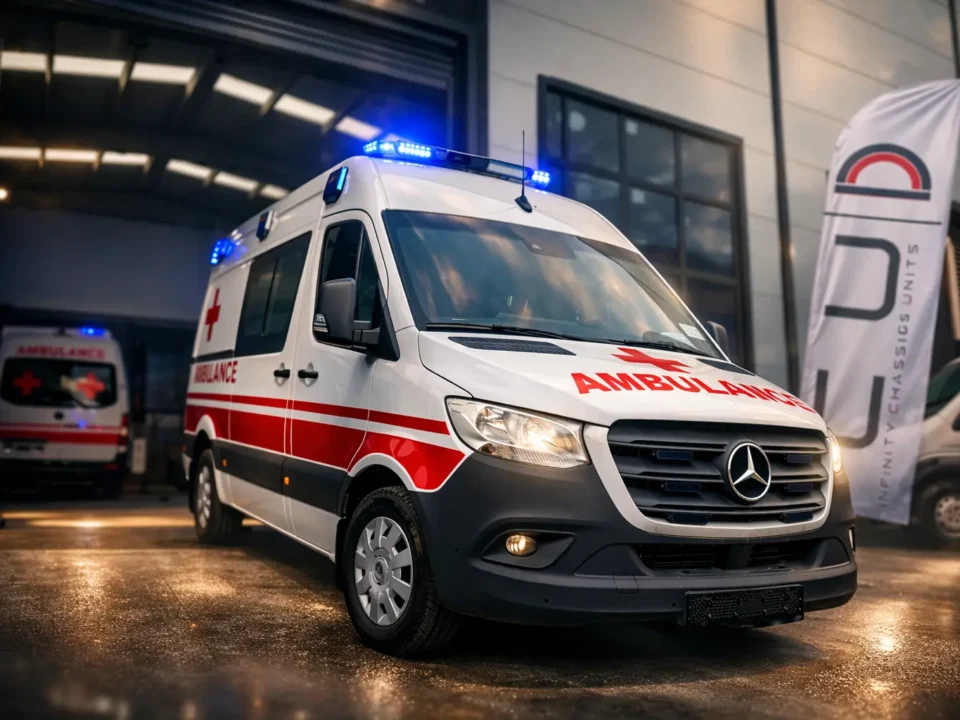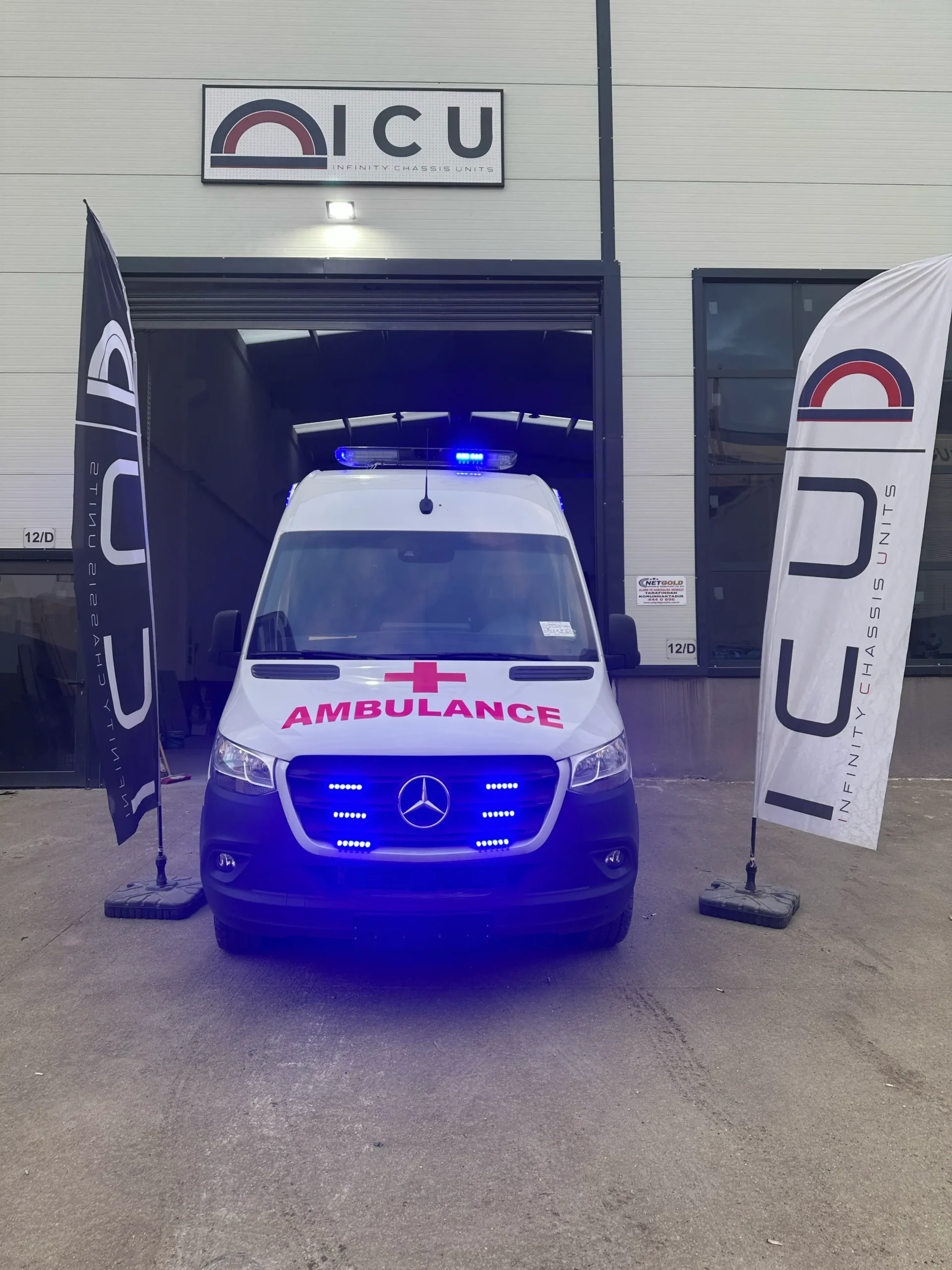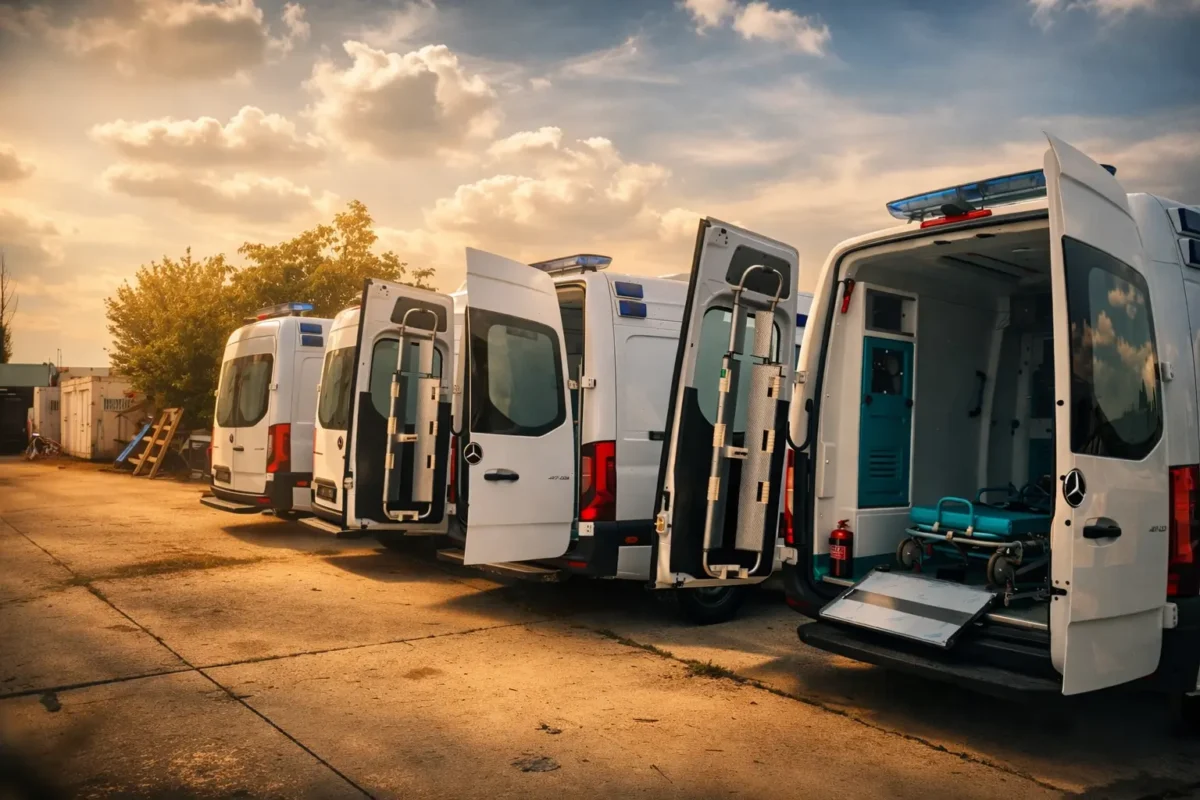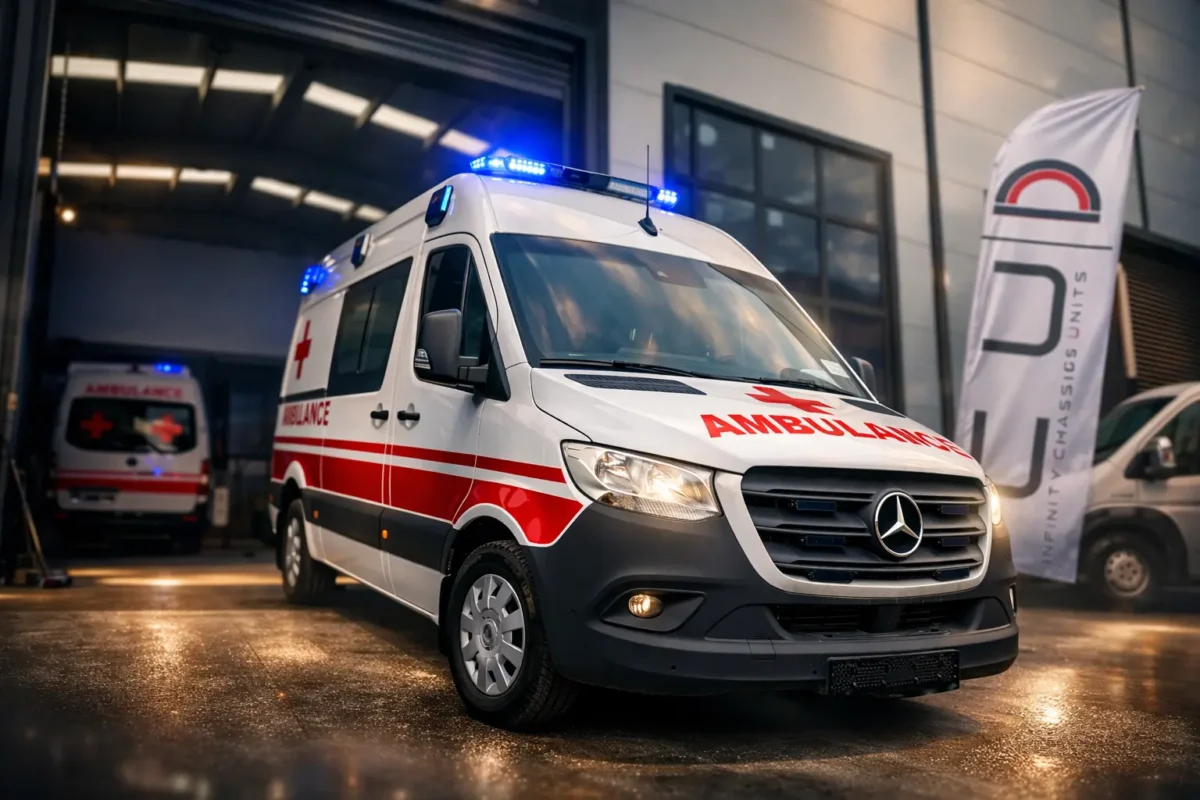
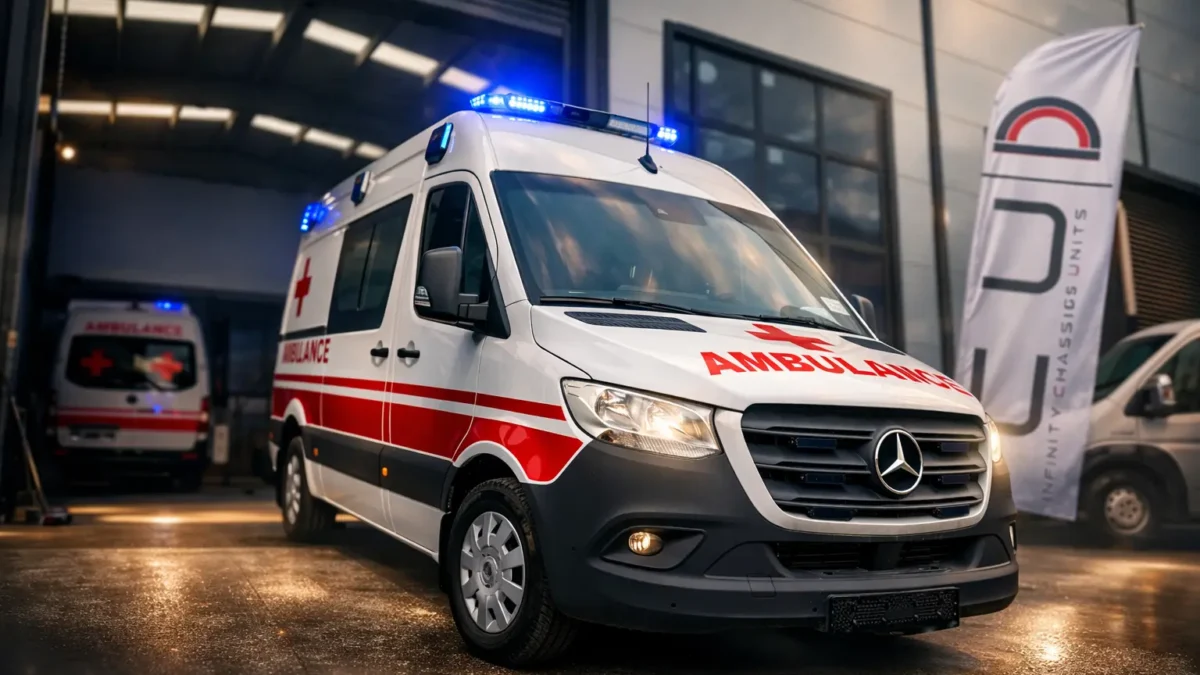
If you are in the market for a new Mercedes Ambulance Price, you have likely noticed that one name rises to the top of the conversation: Mercedes-Benz. Specifically, the Mercedes-Benz Sprinter has become the gold standard for emergency medical services worldwide .
But buying a Mercedes ambulance isn’t like buying a car off the lot. You aren’t just buying a van; you are buying a mobile emergency room. This involves a two-stage process: the Mercedes chassis and the “second-stage” manufacturing where the vehicle is transformed by a specialized upfitter.
If you are planning a purchase in 2026, here is everything you need to know about the manufacturers, the configurations, and the real-world pricing you can expect.
Why Choose a Mercedes-Benz Ambulance?
Before we dive into the costs, let’s look at why the Sprinter platform dominates the EMS world. According to industry experts, Mercedes offers unmatched engineering. Features like advanced stability control, crosswind assist, and a robust chassis provide safety for both crew and patients navigating through traffic .
Furthermore, the diesel engines are known for longevity and fuel efficiency, reducing downtime and total cost of ownership over the vehicle’s lifespan . For international buyers, the global service network is a massive advantage .
Who Are the Mercedes Ambulance Manufacturers?
It is crucial to understand that Mercedes builds the cab and chassis, but specialized manufacturers build the ambulance module. These are often called “second-stage manufacturers” .
- Infinity Chassis Units: A factory-based manufacturer specializing in Sprinter conversions. They focus on international export and compliance with standards like EN 1789, offering custom layouts for BLS, ALS, and ICU needs .
- Fahrtec: A prominent German upfitter frequently seen in European models. Their vehicles are often featured in high-end rescue fleets, such as the “Firebrigade Hamburg” models .
- North American Builders (Braun, Wheeled Coach, Horton): In the US, these major players build Type II (van-based) and Type III (cab-chassis) ambulances on the Sprinter platform, adhering to strict KKK-A-1822 standards .
Mercedes Ambulance Price for 2026
So, how much will you need to budget in 2026? Pricing varies significantly based on where you buy, how the vehicle is configured, and the level of medical equipment inside.
Based on current market data from major export hubs in Turkey and Dubai, here is the breakdown :
1. The Standard Range: $85,000 – $97,500
For a standard Mercedes Sprinter ambulance, you are looking at a price range of $85,000 to $97,500 USD (Ex-Work) .
- What you get: A reliable Type B or C ambulance suitable for Advanced Life Support (ALS).
- Note: This price is for the base medical conversion. It typically includes the ambulance module, basic electrical systems, oxygen distribution, and stretcher facilities .
2. Fully Equipped Type I / Heavy Duty: $115,000 – $180,000+
For heavy-duty modular ambulances (often called Type I in the US, built on a truck chassis), prices rise significantly.
- Mercedes Atego Modular: If you need a massive box on a Mercedes Atego truck chassis for critical care transport, prices range from €120,000 to €180,000 (approx. $130,000 – $195,000 USD) .
- Why the cost? These units feature larger patient compartments, higher GVWR, and often include generators and advanced HVAC systems.
3. Specialty: The Mercedes 4×4 Sprinter
For rural or mountainous terrain, a 4×4 Sprinter is essential.
- Estimated Cost: Roughly $97,000+. The all-wheel-drive or 4×4 system adds a significant premium over the standard RWD models to handle extreme off-road conditions .
What Drives the Price Up?
If you see a Mercedes ambulance advertised for $85,000 and another for $150,000, the difference usually comes down to these three factors:
1. The Module (Box vs. Van)
- Type II (Van-Based): More affordable. The conversion happens inside the existing van shell.
- Type III / Box: More expensive. The Sprinter cab is separated from the patient module, allowing for more space and custom cabinetry .
2. Medical Equipment (BLS vs. ALS)
- BLS (Basic Life Support): Includes a stretcher, oxygen, and basic first aid. This keeps costs low.
- ALS (Advanced Life Support): This pushes prices toward the top of the range. Adding a cardiac monitor (like ZOLL or Philips), a transport ventilator, powered stretcher load systems, and advanced airway management can easily add $25,000 to $50,000 to the final bill .
3. Compliance and Certification
- EN 1789 (European Standard): Ensures the vehicle and its fittings are crash-tested and safe. This certification adds engineering costs .
- KKK-A-1822 (US Standard): Required for American buyers and adds significant cost to the build process .
Hidden Costs: The Total Cost of Ownership
When budgeting for 2026, don’t just look at the Ex-Work price. Smart buyers account for the Total Cost of Ownership .
- Shipping & Logistics: $3,000 – $10,000 depending on your location.
- Import Duties: Many countries charge 20% – 50% of the vehicle’s value upon arrival.
- Local Certification: Modifying the vehicle to meet local road safety laws can cost between $2,000 and $10,000 .
New for 2026: What to Watch
Looking at the production schedules for 2026, manufacturers are releasing new models based on the latest Sprinter generations.
- Fahrtec Conversions: New models like the “Mercedes-Benz Sprinter 18 ambulance” are hitting the market, featuring improved aerodynamics and modernized lighting systems .
- The Vito Option: For smaller, urban response needs, the Mercedes Vito (Metris) is also available as a high-roof ambulance, offering a more compact footprint for city navigation .
Final Thoughts
Investing in a Mercedes ambulance in 2026 is a strategic move. Whether you are a private EMS provider looking for a reliable $85,000 ALS rig or a government entity needing a fully certified $120,000 mobile ICU, the Mercedes platform offers the durability to withstand the rigors of emergency response.
Always ask for a detailed quote. Ensure the manufacturer specifies the chassis year, the medical equipment list, and the compliance standards (EN 1789 or KKK) to ensure you are comparing apples to apples .