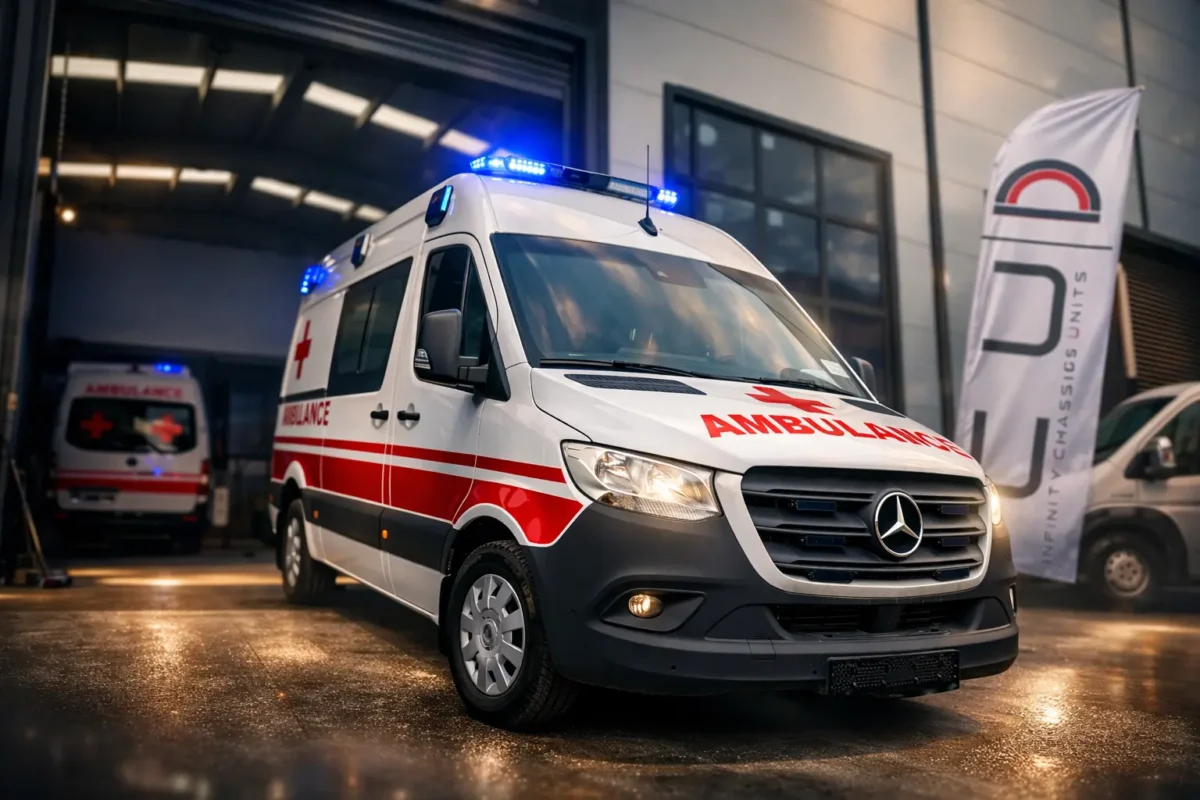

Why a Mercedes Ambulance?
When you start looking for a “Mercedes ambulance for sale,” you’re not just shopping for any emergency vehicle. You’re looking for something specific.
Maybe you’ve seen Mercedes Sprinters on the road and noticed how they look different from other vans. Maybe your crews have been asking for something nicer to drive. Maybe you’re tired of vehicles that feel like trucks when what you really want is something that drives like a car but works like an ambulance.
Whatever brought you here, you’re in the right place.
At AmbulanceTech, we’ve been building Mercedes ambulances for over twenty years. We’ve put them in cities and deserts, in mountain ranges and tropical islands. We know what works and what doesn’t. And we’re happy to share what we’ve learned.
The Mercedes Ambulance Lineup
Mercedes-Benz Sprinter Ambulance
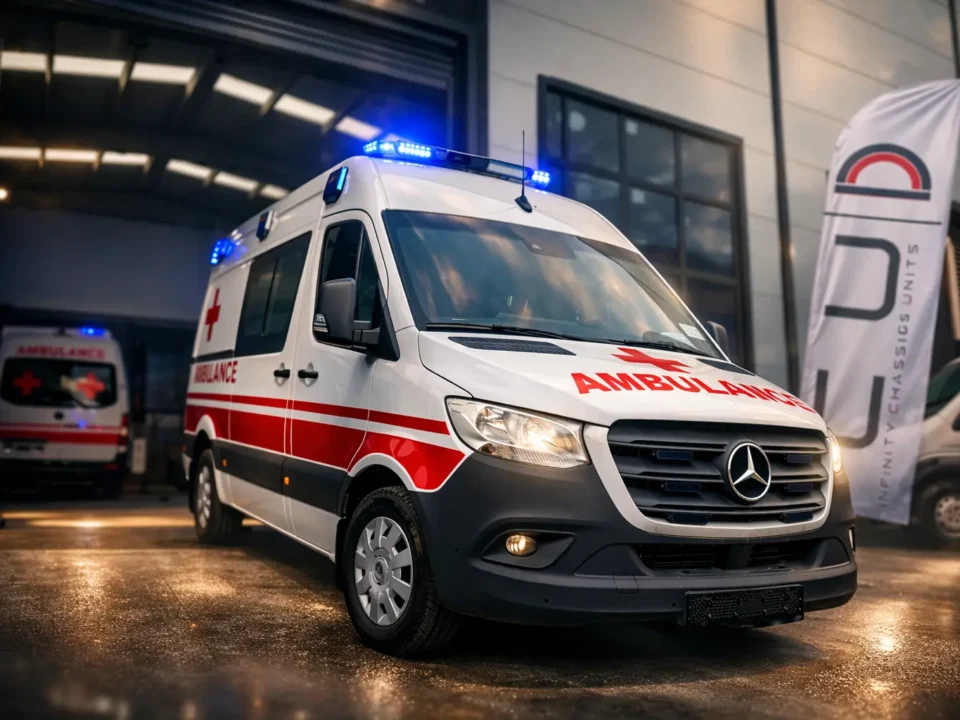
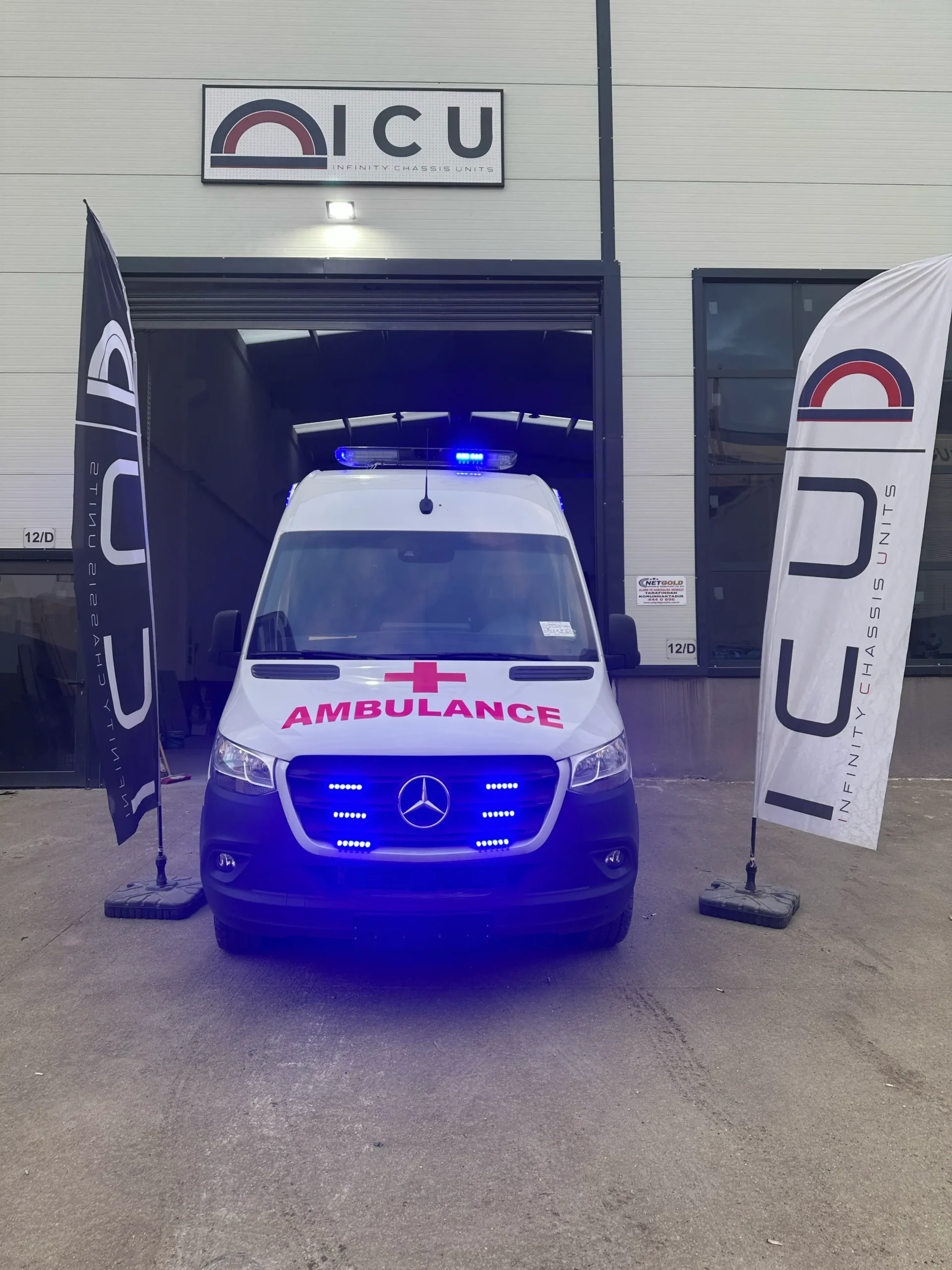
This is the one everyone knows. The Sprinter is everywhere for good reason.
Crews love driving it because it doesn’t feel like a truck. The seating position is comfortable, the visibility is excellent, and after twelve hours on shift, you’re less tired than you’d be in other vehicles.
Fleet managers love it because Mercedes builds things to last. The resale value holds up. Parts are available worldwide. And when you need to sell it down the road, buyers know what they’re getting.
The Sprinter comes in different sizes:
- Standard wheelbase for city work and tight streets
- Long wheelbase for more patient compartment space
- Extended when you need maximum room for critical care
And yes, you can get it with 4×4 if your service area includes rough roads, mountains, or places where weather gets nasty.
Mercedes-Benz Vito Ambulance
The Vito is the smaller option. Think of it as a rapid response vehicle rather than a full ambulance.
Perfect for:
- Busy city centers where a full ambulance won’t fit
- Paramedic fly-cars that get to scenes first
- Specialist roles where you don’t need to transport
Mercedes-Benz Atego Ambulance
The Atego is a different animal entirely. It’s a medium-duty truck chassis, which means it can carry serious weight.
This is for:
- Mobile intensive care units with all the equipment
- Military field hospitals
- Remote mining operations
- Places where roads don’t really exist
Mercedes-Benz Unimog Ambulance
The Unimog is legendary. If you need to go where there are no roads, this is the answer.
Humanitarian organizations use them. Military forces use them. Anyone who absolutely cannot get stuck uses them.
What Makes a Good Mercedes Ambulance?
Here’s something important to understand: Mercedes builds the chassis. They don’t build the ambulance part.
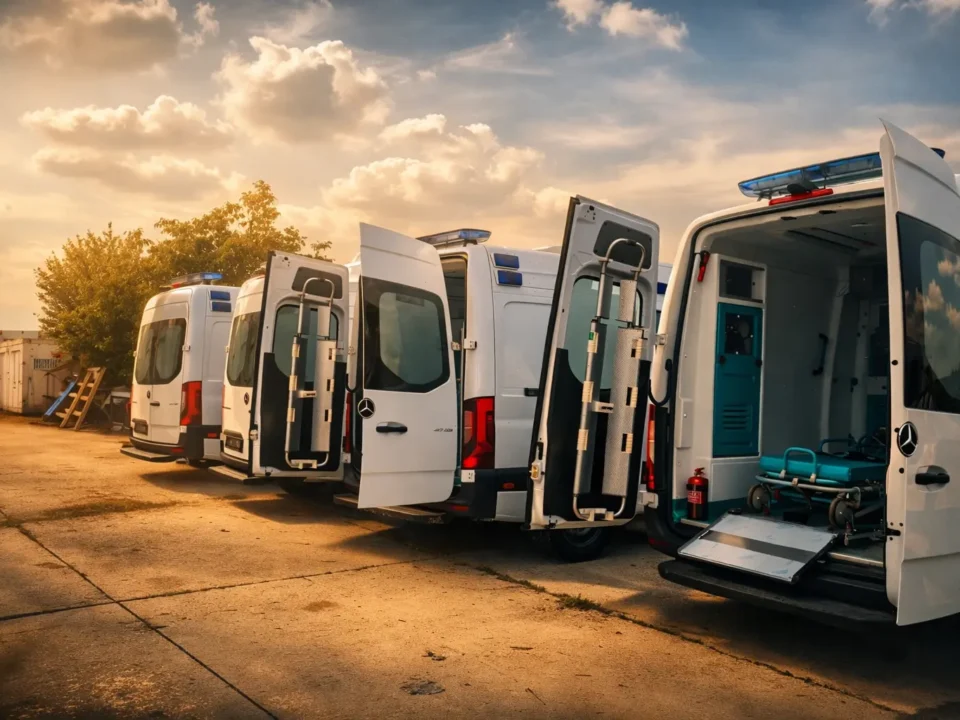
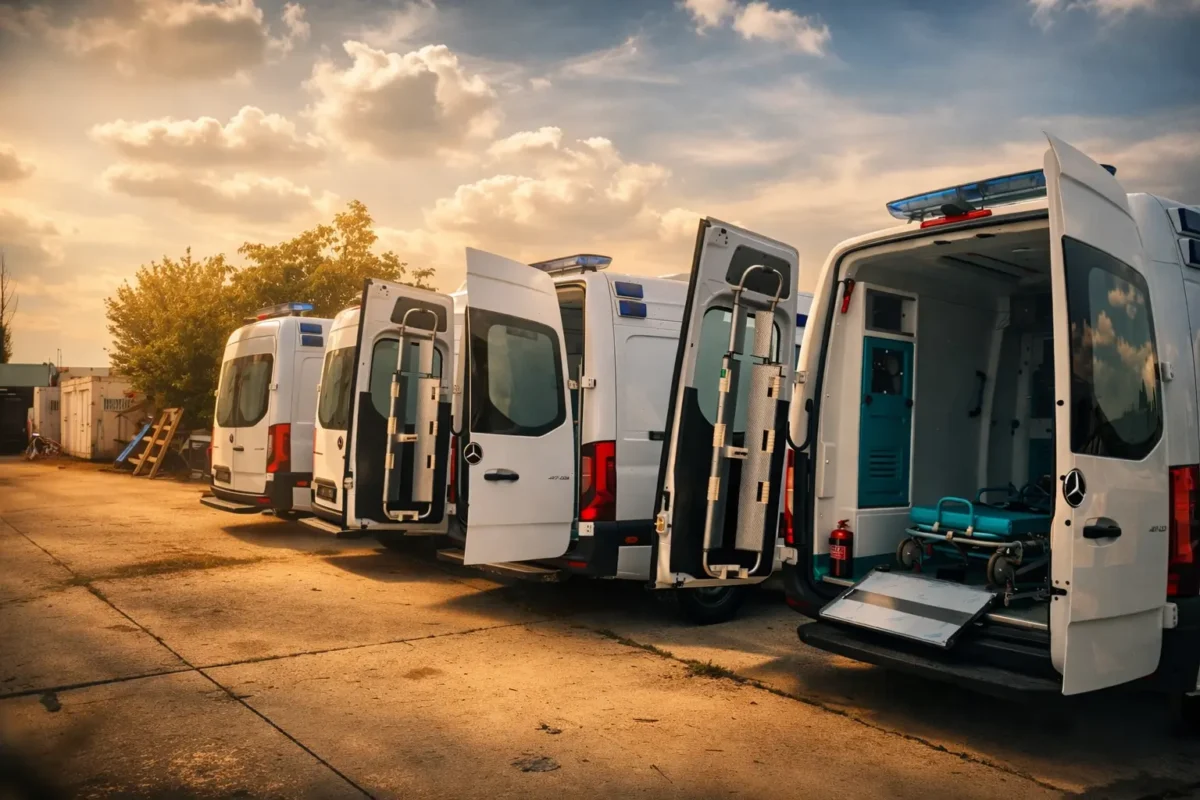
That’s where AmbulanceTech comes in. We take a brand new Mercedes chassis and turn it into a functioning ambulance. And how that conversion is done makes all the difference.
The Patient Compartment
This is where your crews spend their working hours. It needs to be:
- Easy to clean – Seamless surfaces, rounded corners, no place for germs to hide
- Ergonomically designed – Everything where it should be, nothing where it shouldn’t
- Crash-tested – Because equipment becomes projectiles in an accident
- Comfortable – Your crews spend hours back there
The Medical Systems
- Oxygen plumbing so you’re not tripping over bottles
- Suction built right in
- Electrical systems that can handle medical equipment without failing
- Climate control separate from the cab, because patients need different temperatures
The Little Things
Good ambulance builders pay attention to details:
- Lighting that actually lets you see what you’re doing
- Cabinetry that doesn’t rattle after six months
- Flooring that doesn’t peel up at the edges
- Switches that are where you expect them to be
BLS, ALS, or ICU?
Before you start looking at specific vehicles, you need to know what level of care you’re providing.
Basic Life Support (BLS)
For patient transport, clinic transfers, non-emergency work. You need a stretcher, oxygen, basic first aid supplies. The ambulance is essentially a comfortable way to move people who need medical supervision but not intensive care.
Advanced Life Support (ALS)
This is emergency response. You need cardiac monitors, defibrillators, ventilators, advanced airway equipment. Your crews are paramedics doing paramedic work. The ambulance needs to support that.
Mobile Intensive Care Unit (ICU)
Critical care transport. Ventilated patients. Neonatal teams moving fragile babies. Multiple infusion pumps running simultaneously. This is a hospital room on wheels, and it needs to be built accordingly.
The same Mercedes chassis can support all three. But the interior layout and equipment are completely different.
New vs Used Mercedes Ambulance for Sale : What’s Right for You?
New Mercedes Ambulance for Sale
You get exactly what you want. Every cabinet exactly where you want it. Every piece of equipment mounted properly. Full warranty. No surprises.
The downside? You wait. Four to eight months, depending on how specific your requirements are.
Used Mercedes Ambulance for Sale
People search for “ex ambulance vehicle auctions” for good reason. Quality used ambulances can be tremendous value.
But you need to know what you’re looking at:
- Check the service history religiously
- Look for water damage in the patient compartment
- Test every system
- Understand that ambulance engines idle a lot, which is harder on them than highway miles
Good used units exist. We know because we refurbish them. But do your homework.
Global Delivery: Yes, We Ship Anywhere
AmbulanceTech delivers Mercedes ambulances worldwide. Literally anywhere.
We’ve sent them to:
- Saudi Arabia and the UAE
- Nigeria, Kenya, South Africa
- The Philippines, Malaysia, Indonesia
- The UK and Europe
- Caribbean nations
- South America
We handle the logistics. We handle the customs paperwork. We handle delivery to your site. You just need to tell us where you are and what you need.
Fleet Purchases: Multiple Ambulances
If you’re looking for multiple vehicles – a government tender, a hospital system expanding, a private operator building a fleet – we can help.
Fleet advantages:
- Standardized vehicles across your service
- Volume considerations
- Coordinated delivery
- Uniform training
- Common parts inventory
We’ve done fleets of 50 units. We’ve done fleets of 5. Size doesn’t matter. What matters is getting it right.
What to Ask Any Ambulance Builder
When you’re talking to manufacturers, here are questions worth asking:
About the conversion:
- What materials do you use? Are they medical grade?
- How do you mount equipment? Is it crash-tested?
- What’s your warranty on the patient compartment?
About the chassis:
- Do you work with local Mercedes dealers for service?
- Can you get the specific wheelbase and roof height I need?
- What about 4×4 if I need it?
About support:
- What documentation do you provide?
- Can you train my mechanics?
- Where are parts shipped from?
Why AmbulanceTech for Mercedes Ambulance for Sale ?
We’ve been doing this for twenty years. Not five. Not ten. Twenty.
We’ve learned what breaks and what doesn’t. We’ve learned what crews actually need versus what looks good in a brochure. We’ve learned that the little details matter more than people think.
We build Mercedes ambulances because we believe in the platform. But we also build them the way we’d want them built if we were the ones working out of them twelve hours a day.
If you’re looking for a Mercedes ambulance, we’d love to talk. Not about closing a deal. Just about what you need. Then we can figure out together whether we’re the right fit for each other.
AmbulanceTech
Mercedes Ambulances Built for Real Work